Loading…

Opinion
IK Uppsala's decision to fold at the end of this season is not an isolated tragedy - it is the inevitable result of a financial crisis the Damallsvenskan has failed to confront with the urgency it demands.
Ad
VIASPORT is a women’s sports platform covering the latest women’s sports news, scores, schedules, results, standings, rankings, fixtures, transfers and analysis from major leagues, tours and competitions around the world.
Our women’s football coverage includes the National Women’s Soccer League (NWSL), Women’s Super League (WSL), Liga F, Frauen-Bundesliga, Première Ligue, Serie A Femminile, Toppserien, A-Liga and Damallsvenskan, as well as major international women’s football competitions.
In women’s tennis, VIASPORT follows the WTA Tour and all four Grand Slam tournaments: the Australian Open, French Open, Wimbledon and US Open. Our women’s golf coverage includes the LPGA Tour, Ladies European Tour (LET) and the major women’s golf championships.
VIASPORT also covers women’s basketball, including the WNBA, as well as women’s boxing, MMA and combat sports. Our boxing coverage follows major fights, world championships, rankings and title bouts across organizations including the WBA, WBC, IBF and WBO, while our MMA coverage includes major organizations such as the UFC, Professional Fighters League (PFL), Invicta FC, ONE Championship and RIZIN Fighting Federation.
Our wider women’s sports coverage includes athletics, cycling, swimming, winter sports, motorsport and other emerging women’s sports and competitions. From domestic leagues and professional tours to major international championships, VIASPORT brings women’s sports news, live updates, results and analysis together in one dedicated destination.
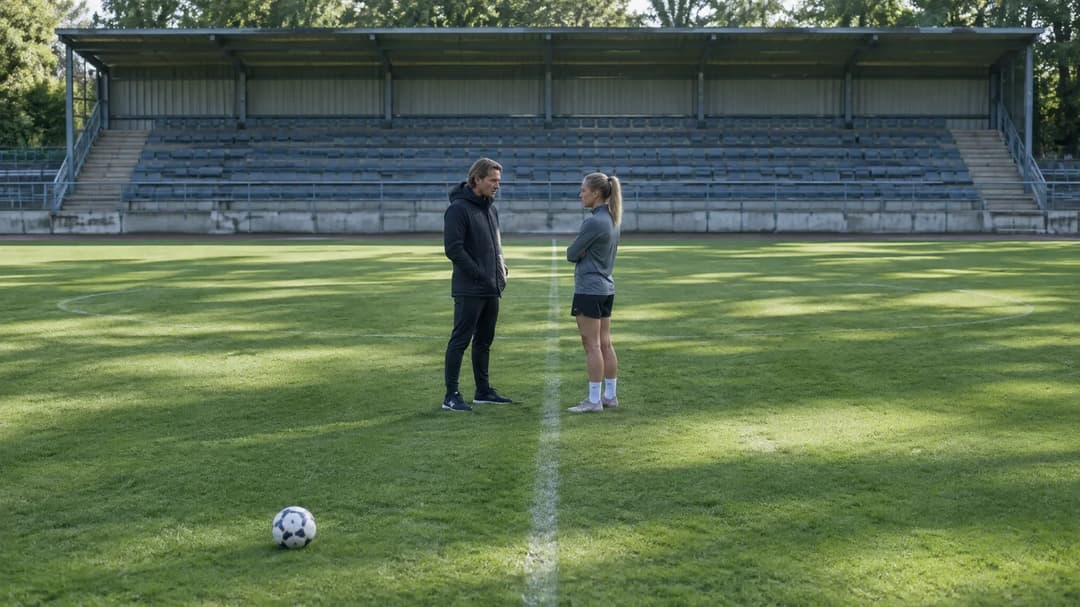
There is a moment in every financial crisis when the conversation stops being about spreadsheets and starts being about survival. IK Uppsala passed that threshold last week. The club confirmed it will fold at the end of this season - not restructure, not downsize, not merge. Fold. Cease to exist. And while the news landed with a thud in Swedish football circles, what should truly alarm people is how unsurprising it felt.
I wrote in August about the Damallsvenskan sponsor crisis - Svenska Spel and Obos both walking away, no television deal in place for next season. At the time, I said the league was facing a structural emergency. I did not expect the first casualty to arrive before the current campaign was even finished.
Uppsala's demise is not an isolated incident. It is the logical endpoint of a system that is quietly strangling standalone women's clubs while dual-gender organisations - seven of them now in the Damallsvenskan - pull further ahead with superior commercial infrastructure and shared costs.
Kristianstad DFF chairperson Stina Trimark has been sounding the alarm. Sponsors are withdrawing. The OBOS and Svenska Spel partnerships are gone. The Viaplay broadcast deal expires at the end of this season with no replacement confirmed. Attendance has dropped more than 15 per cent, with average crowds now below 800. Every one of those numbers points in the same direction.
Elitfotboll Dam general secretary Jenny Hermansson has warned that other clubs could follow Uppsala. She is right to do so. When your revenue streams are evaporating simultaneously - sponsorship, broadcast, gate receipts - the margin for error disappears entirely.
Hermansson insists the long-term outlook is positive, citing rising transfer fees and growing global interest. Fair enough. The international market for women's football is undeniably expanding. But global growth does not automatically trickle down to a club in Uppsala with no television money and dwindling sponsors. Transfer fees benefit selling clubs only when they have players worth buying - and developing those players requires the very infrastructure that is now crumbling.
Sweden's women's football pedigree is extraordinary. The national team competes at the highest level. Players from the Damallsvenskan populate rosters across the WSL, NWSL and Liga F. The talent pipeline is real. The domestic league that feeds it is the bit that is breaking.
What frustrates me most is the lack of urgency. Uppsala are being thrashed 5-0 by Kristianstad and sitting on six points at the bottom of the table with four matches left in a season they will not survive. Meanwhile, 16-year-old Fanny Peterson is lighting up the league with six goals, Häcken are cruising to a title with an eight-point lead, and Malmö are scrapping for European places. The football is there. The product exists. But nobody with the power to act seems to be treating the commercial collapse with the speed it demands.
EFD is negotiating new deals. Staff have already been laid off. The organisation is rethinking match scheduling. These are sensible steps. They are also the equivalent of rearranging furniture while the building subsides.
A club just died in the middle of a season. Not metaphorically - literally. And the structural conditions that killed it have not changed. If anything, they have worsened since August. Without a broadcast deal, without headline sponsors, and with crowds that would embarrass a decent pub quiz, the standalone clubs in the Damallsvenskan are operating on borrowed time.
Two doors closed in the summer. Now a club has closed entirely. The question I asked in August still stands - and the answer is more urgent than ever: who in Swedish football is going to open new doors before the next one shuts for good?
Written by
Updated
Copyright 2026 VIASPORT
Eva Hernández, Editor-in-Chief
VIASPORT uses AI to generate, enhance, and quality-assure its journalism. While we strive to create engaging and accurate material, imagery, grammar, and spelling may occasionally deviate from conventional standards.